Course Overview
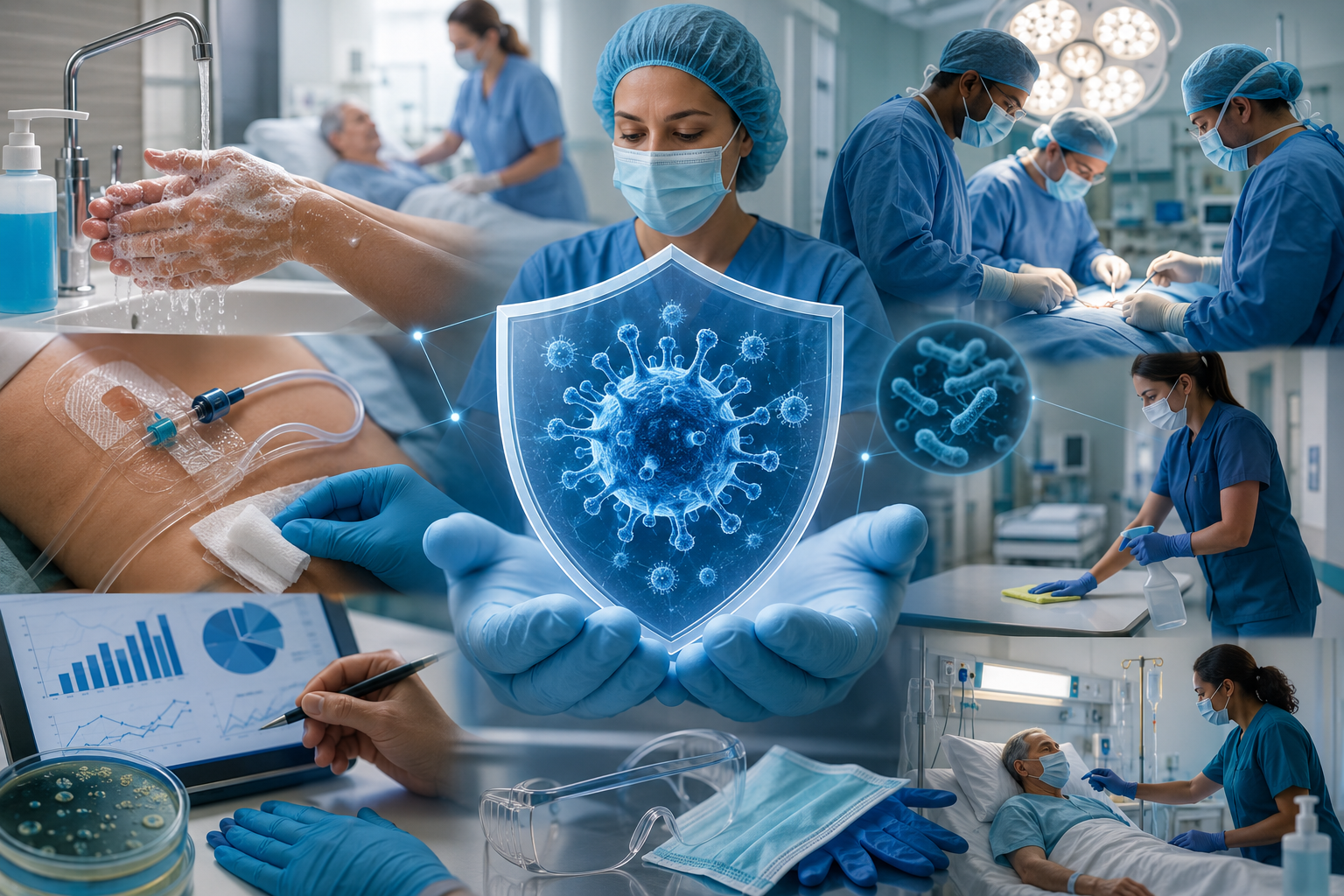
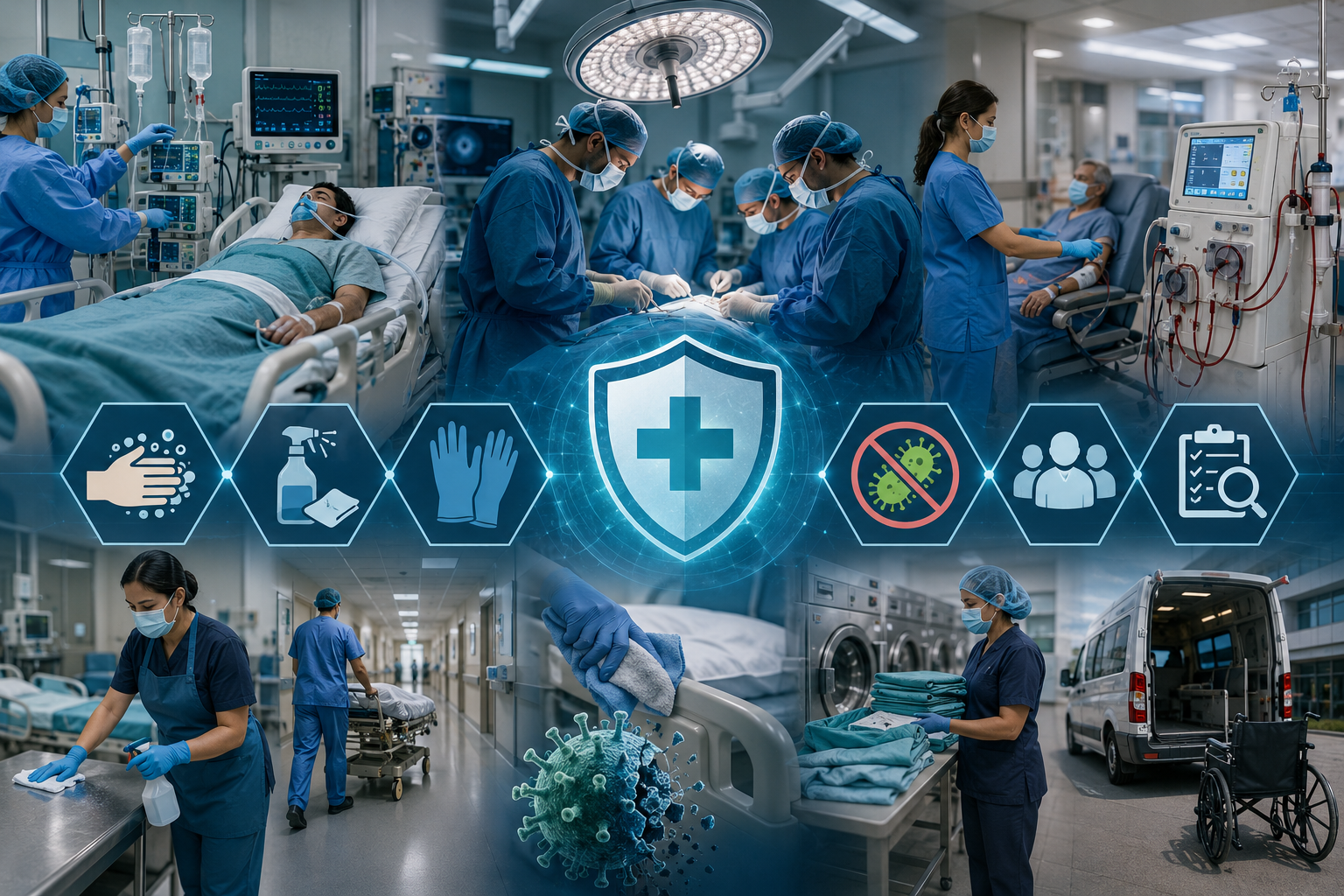
This advanced training program focuses on infection prevention and control (IPC) strategies in high-risk healthcare environments where patients are most vulnerable to healthcare-associated infections (HAIs). The course provides a comprehensive exploration of infection risks and prevention practices across critical areas including Intensive Care Units (ICU), Operating Rooms (OR), dialysis units, perioperative settings, transportation, and healthcare support services such as laundry.
Participants will gain practical, evidence-based knowledge aligned with global standards from organizations such as World Health Organization and Centers for Disease Control and Prevention, with a strong focus on environmental cleaning, device safety, antimicrobial resistance, and system-level infection control practices.
The program emphasizes operational implementation, multidisciplinary collaboration, and measurable quality outcomes in infection prevention.
Training Needs
Healthcare-associated infections (HAIs) remain a major challenge in high-risk clinical areas such as ICU, operating rooms, and dialysis units. Increased patient acuity, invasive procedures, and complex workflows elevate the risk of infection transmission.
Recent global reports from World Health Organization and Centers for Disease Control and Prevention highlight:
Persistent gaps in infection prevention practices
Rising antimicrobial resistance (AMR)
Inconsistent adherence to environmental cleaning protocols
Increased infection risks from non-clinical sources (transport, laundry, devices)
This program is designed to address these gaps through targeted, evidence-based education."
Smart Goals
Discuss What is infection ? Different routes of infection and How to avoid infection
History of IC,Responsibilities of IC team,Importance of education to improve infection and prevention control
Explore governance and its importance , Health care researches and types
Describe Definition of CRBSI and risk factors and How to avoid CRBSI infection and management
Explore Definition of fever and How to diagnose and deal with fever
Explore Signs of wound infection Wound care and assessment tools
Demonstrate Definition of audit , importance of Audit cycle and Who should involved in audit
Explain definition of SSI and Risk factors of SSI and how to avoid
Discuss Different action of antibiotics and How resistance develop and How to decrease resistance
Explain Importance of food hygiene and Principles of infection control to avoid food contamination
Assess What is surveillance? And Different purposes of surveillance
focuses on the specialized protocols and environmental controls required to minimize Healthcare-Associated Infections (HAIs) in critical hospital units.
Discuss Guidelines for IPC practices in OR
Explore Definition of vehicle transmission and Common sources of infection
Emphasizes that AMR is one of the top global public health threats, leading to longer hospital stays, higher medical costs, and increased mortality."
OutComes
1.Understand the Mechanism of anti microbial Resistance
2.Understand ""care bundles"" for ventilators, central lines, and urinary catheters to lower infection rates in ICUs.
3.Define specific decontamination levels - distinguishing between routine cleaning, intermediate disinfection, and high-level sterilization for equipment and surfaces.
4.Identify infection risks in high-risk clinical environments (ICU, OR, dialysis, perioperative areas).
5.Explain principles of environmental cleaning and disinfection in specialized healthcare settings.
6.Describe the role of antimicrobial resistance in infection control challenges.
7.Recognize infection transmission risks associated with non-critical devices, transportation, and support services.
- Teacher: Site Owner